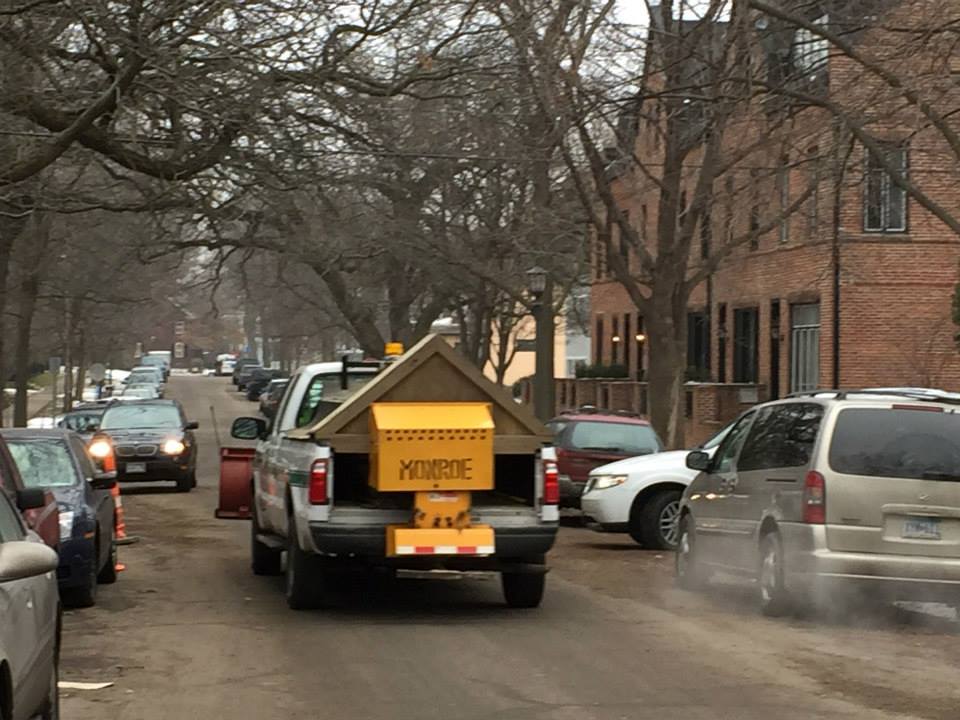
|
TWO-SIDED
vs. ONE-SIDED
PARKING |
||||
|
||||
|
More than a few businesses on Selby, along with multi-family buildings in the neighborhood, have insufficient parking for their customers/tenants. Our neighborhood was built long before "everybody" needed a car. Over the years, the City has granted variances in which strict parking requirements have been waived or relaxed. Decades ago, the City was an active participant in the conversion of large parking lots on Selby near Western into spaces that today are unavailable for general parking (one lot became a building; another's use is restricted by the YWCA).
We
love our local businesses and we love our neighborhood. Adding cars to both sides of our streets
will create new problems. Business
customers come and go, but area
residents get to live every day with existing plus any newly created
problems. When analyzing public input regarding this city street
or that city block, opinions of adjacent property owners should carry
greater weight than opinions offered from a distance. When
soliciting public input, concerted efforts should be made to actively
engage all affected parties. Gathering public input does not mean
advertising quietly, listening politely if somebody shows up...and then doing it my way. Neighbors
(residential and commercial) must work together to create real
solutions.
My general understanding is that single-sided parking in our neighborhood went into effect in the late 1960's to ensure adequate fire department access by large fire trucks, etc. That seems to be the official story. Not so easily explained away is another possibility. Saint Paul's 1960's era budget shortages, combined with Ramsey Hill's lack of politically-connected residents, may have encouraged the creation of single-sided parking in this somewhat limited area. There were few, if any, squeaky wheels. It is easier, and costs less, to plow empty streets. Since
1977, I have owned apartment buildings on Holly Avenue between Dale
& Kent Streets, a residential block with one-sided parking.
Some streets in the area have two-sided parking. I have been
driving and walking through the neighborhood three to seven days of
almost every week for 38 years. Our buildings were built around
1900 -- long before cars filled streets. Emergency
access to bigger buildings is a critical life-safety concern. One
apartment building or one customer-intensive business will tend to have
more emergency calls than one single family home. It is not
necessarily "bad" management. It's just that more people
create more issues. In addition to occasional fire trucks and
ambulances, our streets are used by week-day school busses, weekly
recycling trucks, lawn-care and snow-removal contractors, occasional
delivery and garbage trucks, plus the city's wintertime snow plows.
Today, my tenants would certainly appreciate more places to park. Happy tenants are likely to pay more rent, but that's no reason to skimp on safety. As an apartment building owner, more parking sounds great … but, I have mixed feelings.
Happy tenants (like happy restaurant-goers) are not be a good enough reason to unilaterally overrule residential neighbors' quality of life. COMMENTS: ● ONE-SIDED
PARKING –
Mostly on long blocks, these streets have traffic lanes that are almost
always wide enough for cars and trucks or busses to pass each other,
summer and winter. Generally the extra space just sits there,
unused, and attracts calls for two-sided parking. ● TWO-SIDED
PARKING –
Mostly on short blocks, these streets
tend to be filled evenings and weekends with residents' cars.
At their summertime best, traffic lanes are quite narrow.
At their wintertime worst, traffic lanes become too small for two
side-by-side cars. o
SUMMER –
Streets have traffic lanes that are generally too narrow for cars to
easily pass each other, and always too narrow for cars to pass large
trucks or school busses. On most short blocks, drivers can wait
mid-block at the alley while oncoming vehicles drive by. On long blocks,
almost none of which have permanent mid-point passing zones, somebody
must stop at the corner or back up to let oncoming vehicles pass. o
WINTER –
When parked cars fail to move during snow emergencies and/or when city
plows fail to push snow all the way to both curbs, our streets (both
residential and commercial) can become impossibly narrow. [Example:
A few winters ago MTC busses were banned from Selby Avenue between
the Cathedral and Lexington -- a problem caused by too much snow, not
enough snow removal, and aggravated because the city chose to beautify
Selby between Western and Lexington by narrowing traffic lanes while
widening boulevards and sidewalks.]
When traffic lanes on our residential streets become severely
narrowed, one illegally-parked car during a snow emergency might delay
or prevent the plowing of an entire block. Non-emergency plowing
of very narrow traffic lanes risks damage to legally-parked cars if snow
is pushed against or under those cars. Wintertime two-sided
parking might have to be disallowed. ● UPTOWN, MINNEAPOLIS – is a severely over-crowded neighborhood that seems to manage with narrow streets and two-sided parking. One-way streets can eliminate oncoming vehicles but do not help if a delivery truck stops mid-block and halts all traffic. ● CROCUS HILL, ST. PAUL – has two-sided parking along many (not all) streets. Maybe those streets are wider than streets in Ramsey Hill, or maybe there are fewer on-street cars. Two-sided parking along those two-way streets seems to be successful. Residential permit parking exists close to Grand Ave. ● FIRE DEPARTMENT ACCESS – At a neighborhood meeting on 04/08/2015, a public works person + a fire chief explained: 1)
State statutes specify 20-ft wide fire lanes; but 2) The St. Paul Fire Dept. has found that, at a minimum, an 18-ft wide fire lane is adequate (not great, but...) 3) An 18-ft wide fire lane, plus two "standard" 8-ft wide parking lanes = 34-ft minimum street width 4) Many streets are 32-ft wide; Some are narrower (according to unverified GIS measurements) 5) With two 8-ft parking lanes, a 32-ft wide street leaves only a 16-ft fire lane. That's 4-ft narrower than statutes specify. ● PERMIT
PARKING –
Owners of commercial businesses like to rely on on-street parking in
residential neighborhoods for their non-residential customers.
When commercial parking aggravates too many neighbors, residents can
(and do) ask the city to create permit-only parking zones.
Neighbors on streets close to Selby could consider permit-only parking. ● TRIAL PERIOD – Three- to six-months is too short … unless it begins in December of a snowy winter. ● PRIORITIZING
INPUT –
regarding two-sided on-street parking in our residential
neighborhood: 1)
Most important – Fire department, public works department,
police, etc. 2)
Property owners on both sides of the street/block in question 3)
Tenants on both sides of the street/block in question 4)
Owners of residential property within 300 to 500 feet of the
street/block in question 5)
Commercial businesses with sufficient parking per standards for new
construction 6) Commercial businesses with too little parking for their delivery trucks & customers' cars 7)
Least important –
Everybody else, etc. ● PUBLIC INPUT – The city should hold hearings and notify property owners (& tenants?) of those opportunities. Populate the neighborhood's two-sided parking task force in accordance with the "input priorities" shown above. Beware of commercial business-owners' conflicts of interest. IMPORTANT: Gathering public input does not mean advertising quietly, listening politely if somebody shows up...and then doing it my way. ● SUGGESTION
– (Just one of many possibilities) – There is no
one-size-fits-all answer. Decide this on a block-by-block
basis. If the street is not less than 32-feet wide, use a
"petition" system whereby property owners on both sides of the
street along a single block circulate a petition that calls for
two-sided on-street parking for that block only. Something like
the existing process that is used when residents want to create a
Residential Permit Parking Zone. Then, if enough people sign the
petition (75%?), and if the fire department + public works +
police + City Council agree, parking becomes 2-SIDED -- on that block
only. Eric
Lein 361
Summit Ave, St. Paul, MN 55102 |
||||
|
||||
|
|
||||
|
|
||||
|
||||
|
||||